
May is Mental Health Awareness Month. While mental health is a topic that can be difficult for some, it’s an important one. This is why our social media for the month covered various tips and information surrounding it. Two of the main topics we’ve been covering the last couple of weeks include blue and green spaces and how they can positively impact our well-being. Another important part of mental health is social connection, which we’ve also highlighted in our social media.
Blue and Green What?
If you’ve never heard of blue or green spaces before, here’s a quick breakdown:
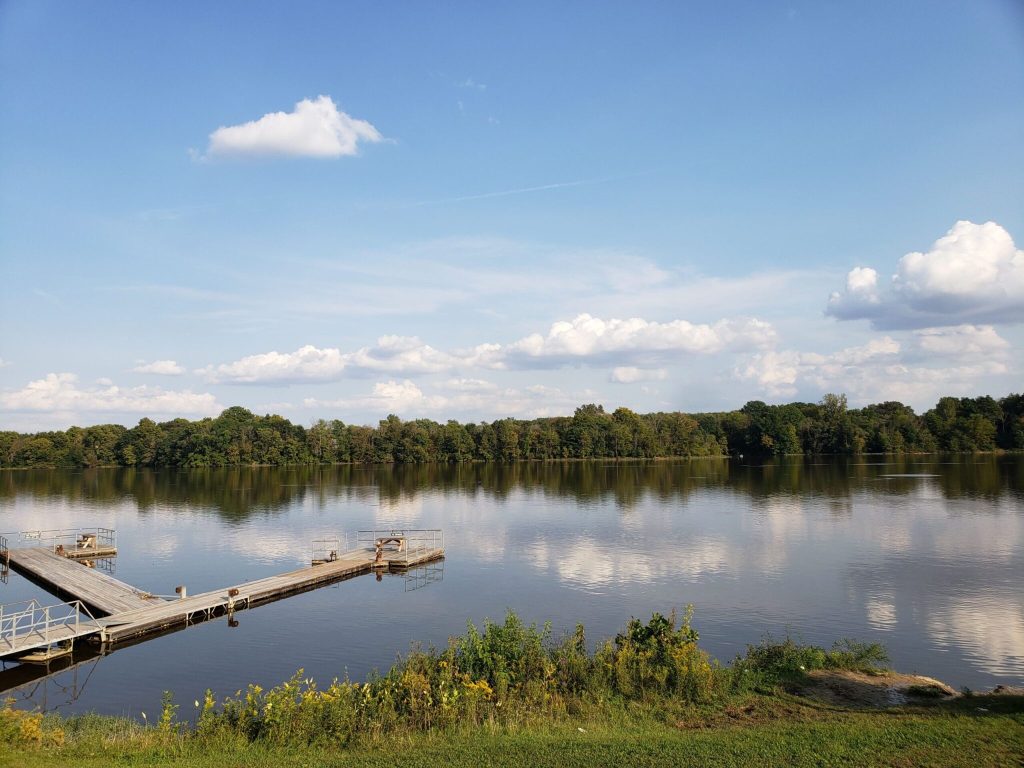
- Blue space refers to visible water features; much the same way green space refers to visible greenery. Both natural and man-made water features count; the sea, rivers and streams, lakes, ponds, waterfalls, pools, and more. (Source: Scenic America)
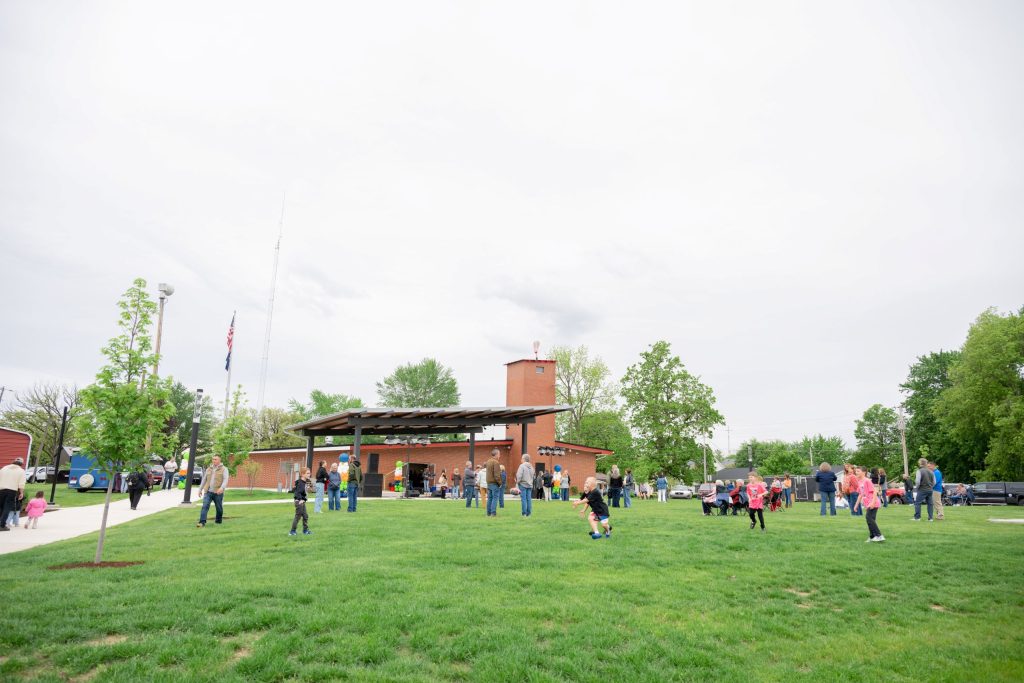
- Green space is an umbrella term for maintaining or unmaintained environmental areas. Think about nature reserves, wilderness environments, and parks. Green spaces are often purposefully designated for their recreational or aesthetic value. (Source: National Library of Medicine)
How these Spaces Impact Mental Health
Research shows that both blue and green spaces have a meaningful positive impact on mental health, and their importance only grows as populations continue to expand.
Blue spaces can have a calming effect on our mental state and have several health benefits. According Scripps Health, benefits include increased feelings of calm, faster healing, increased physical activity, and better sleep.
Green spaces carry similar benefits. People living in areas with more green space tend to experience less mental distress, lower rates of anxiety and depression, greater overall well-being, and healthier cortisol profiles. Exposure to natural environments is also psychologically restorative, supporting emotional health and our ability to reflect on life’s challenges. (Source: National Library of Medicine)
Importance of Social Connection
It’s well known that the COVID-19 pandemic had an incredibly negative effect on social connection. While some people may prefer to stay inside and keep to themselves, that isolation isn’t necessarily good for physical or mental health. According to the World Health Organization, 1 in 6 people worldwide are affected by loneliness, with significant impacts on health and well-being.
Social connection is the structure, function, and quality of our relationships with others. In a 2023 report from the U.S. Surgeon General on the Healing Effects of Social Connection and Community, it’s noted that social connection is a critical and underappreciated contributor to individual and population health, community safety, resilience, and prosperity. Additionally, the report highlights the risks associated with the lack of social connection. It can increase the risk for premature death as much as smoking up to 15 cigarettes a day.
While it may seem easy to view social connection as a personal choice, the report notes that connectedness is also shaped by the social infrastructure of the community where one lives, including physical assets of a community, programs, and local policies. The report further states, “In sum, social connection is more than a personal issue. The structural and social characteristics of the community produce the settings in which people build, maintain, and grow their social networks.”
Understanding this is part of what drives the investments we’ve made to create positive, connected spaces right here in Wayne County.
Creating These Spaces in Wayne County
Wayne County is fortunate to have beautiful green and blue spaces woven throughout our communities, and we look forward to expanding and improving what’s available. A recent example: the Wayne County Foundation, through Forward Wayne County, was awarded $5 million from Lilly Endowment Inc. through the Community Leadership Implementation Grants component of the eighth phase of its Giving Indiana Funds for Tomorrow (GIFT VIII) initiative.
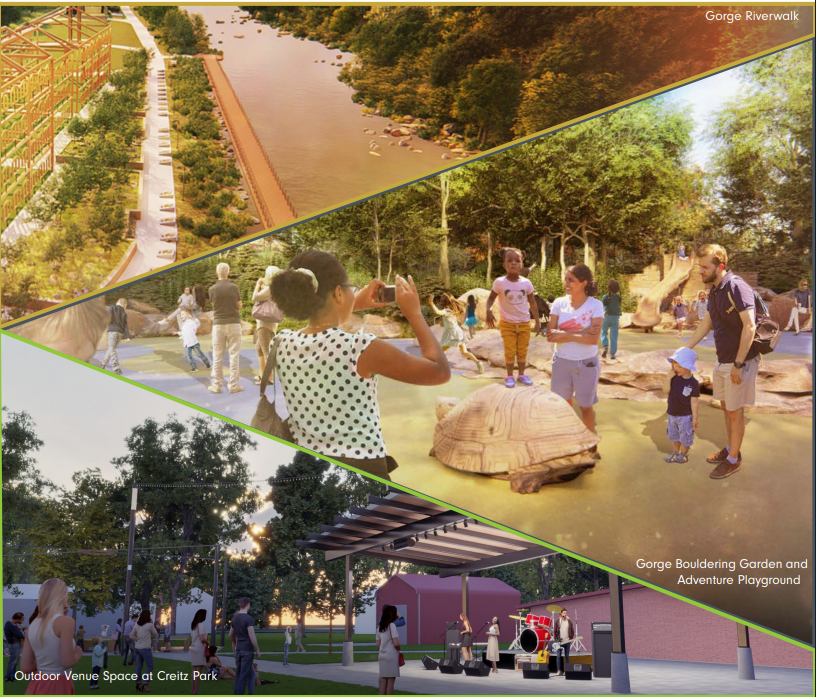
Those funds are hard at work: supporting a riverwalk, bouldering garden, and adventure playground in the Whitewater Gorge, as well as an outdoor venue space in Cambridge City, known as Creitz Park Pavilion. Want to learn more about the full GIFT VIII plan? Read it here.
The HELP (Hoosier Enduring Legacy Program) provided significant investment in green spaces in Milton, Dublin, Economy, East Germantown, and Cambridge City. In addition, the program provided funding for projects in the Whitewater Gorge blue space.
And communities are prioritizing green spaces in the countywide strategic investment plan. GIFT IX will look to improve or add additional green spaces across Wayne County.
There’s something quietly powerful about a community that invests in spaces where people can simply be. As Wayne County continues to grow its parks, waterways, and gathering places, we know that building a healthy community means more than infrastructure. It means creating the conditions where people can truly thrive.
